Showing posts with label poetry. Show all posts

Sunday, October 4, 2015

Deep in Their Roots

I take pictures with my phone of stuff I see as I go about my day.  
 
I don't search for beauty, and I definitely don't search for any kind of meaning when I do this.  In fact, I try very hard not to think about anything at all.  A little spasm goes off in my head, and I think:  what the hell?  The most uninteresting shit is what I'm looking for, to be honest:  the interregnums, the gaps between moments that don't really justify jpegs but still I do it, and then I look at it and post it and it's gone.  It's kind of like a form of prayer, like I'm absorbing meaning by cancelling out the pursuit of it.  And posting them on Facebook lets them come back at me as if they never were photos in the first place, just little digital burps trapped inside other nonessential information. 
 
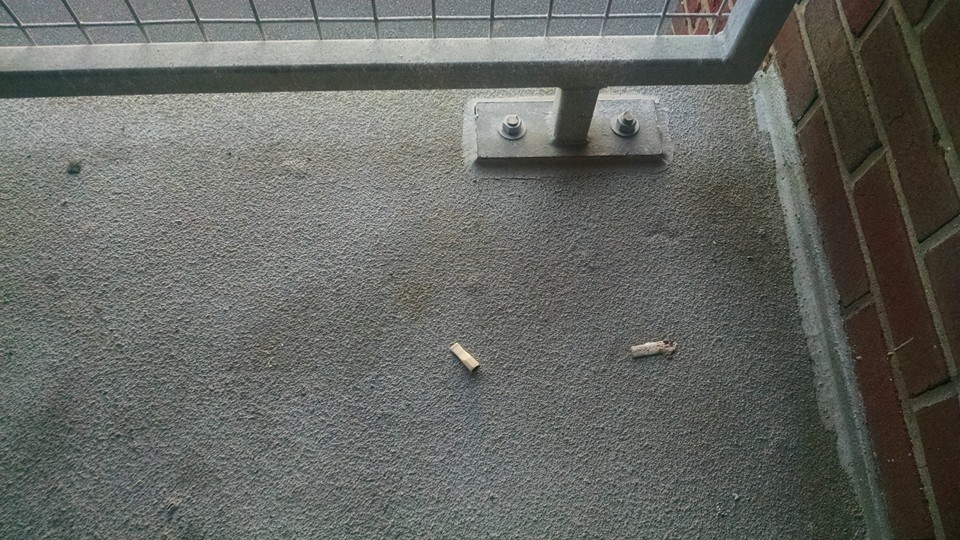
If you stare at things long enough you find what you need to find, but still you won't have any idea what you've found.  These stupid pictures are evidence of that.  A solitary silver light-switch menacingly daring you to talk to it, fluorescent tubes above a urinal humming themselves to sleep, a couple of cigarette butts staring at each other longingly on a parking garage platform.  These images don't lie because they don't have to.  They just do their jobs, being meaningless and factual and then gleaming toward a poetry you can't really publish or even most of the time translate into actual poetry.  They don't need language and they really don't need you. They are pretty close to unconsciousness and yet they are fully aware of what they are, what they are supposed to be doing.  It's like that last beautiful glimmering burst of knowing something right before you forget it and it's gone forever.  
 
So here are some of these pictures I've taken.  I used to do the same exercise back in the day with a Polaroid camera.  And those milky-shiny pictures turn into jumping-off points for short stories, novels, poems, whatever.  Maybe some of these will spawn something else, not too sure, but they make me feel sharper somehow.  They give me a reason to contemplate without connecting to common sense.  One of my favorite poets, Theodore Roethke, wrote this in his journal:  "Deep in their roots, all flowers keep the light."
 
That's kind of what these photos are:  unobtrusive and homely flowers keeping the light deep down inside a network of roots and tunnels and tributaries that flow into and out of one another without anyone noticing, caring or even feeling the need to see. 


Monday, February 16, 2015

Writing on Mirrors

Vincent Gray

Dale Jackson's calligraphy on a mirror reflecting Ricky Walker's drawings and Patricia Murphy's sculpture.

Patricia Murphy

Patricia Murphy

Vincent Gray

Vincent Gray

Signage

Dale Jackson

Ricky Walker

Ricky Walker and Patricia Murphy

Ricky Walker
 
I had this idea to ask Dale Jackson to write on mirrors about a year ago, for a show still unnamed.  Dale's work is about writing down segments of language on any surface he can find (usually paper, but sometimes shoes, other objects, wood, etc.), words and phrases that don't interrelate as much as disintegrate, flowing and disappearing into the ether the way living life does.  It's as if he's writing verses for his own unique invisible Bible, imposing a very structured sense on nonsense, and providing a way to reiterate and reinterpet one of my favorite actual Bible verses, Ephesians 1:2:  "'Meaningless! Meaningless!' says the Teacher. 'Utterly meaningless! Everything is meaningless.'" 
 
So Dale obliged.  On six mirror tiles, he wrote what he writes and it's somehow both magical and jarring when you see it in the gallery.  His words imposed over a reflection of a reality that has no end, no focal point, just silvery and obligatory scenery.  Black Sharpee sharpness across all that is there, sort of cinematic, sort of like midair doodling, sort of like a conversation freezing into calligraphy across the space caused by dialogue. 
 
Those mirrors vacuum in the space.  Saturday, while Bill hung Ricky's repetitive, gorgeous-Crayola drawings, I watched them appear one by one in the marked-up mirrors on the wall, and it all somehow made total sense.  Then across the gallery is Vincent's Pointillist masterpieces of boxers boxing, a whole neighborhood of disenfranchised people holding their hands up, the flashy eyelids of Diana Ross.  And in the middle of the floor, Patricia's oddly shaped little figments, geometrical clouds turning into Kafka bricks, 1970s album covers for Electric Light Orchestra, resplendent with half-dead houseplants and a beautifully restricted sense of whimsy. 
 
This show called "Makeshift" keeps flashing in my head like a book of poems I read when I was in high school and only now can understand.  It's a bunch of blocked-out, accidental haikus and villanelles, a suite of works you can't solve a puzzle with, and yet when you see all of their works stationed in one room it seems somehow predetermined, makeshift in a totally wonderful way.
 
I know, I know.  I keep going on and on.  But I think it's taken me about 15 years to understand this is what I want art shows to look like.
 
February 28, 2015 "Makeshift:  New Works by Vincent Gray, Dale Jackson, Patricia Murphy, and Ricky Walker" opens with a reception 6 to 10 pm.


Saturday, September 27, 2014

"What I Love Is Near at Hand"


Bill and I started a ritual a couple weeks back.  We go for a Friday after-work walk at Spring Grove Cemetery.  It's a truly beautiful place in the middle of neighborhoods and nothingness, and as you walk through its hilly, calm, planetary atmosphere you start to feel connected to a way of understanding things that's transformative without movement or strife or even thought.  All those gravestones, all that sunlight splashing off of leaves.  And the smell as you go from bright sunlit oxygen into a small ravine shadowed with old trees, musty, cool and secret, the sunshine falling through in short silvery intervals onto gravel and dirt.  It's a smell you remember but can't name (lost rivers, empty buckets, old water-hoses), like a drug you took as a teenager that was so pleasant you can never have that same experience ever again.  Lost time or maybe a dream of lost time is what it is, nostalgia stirred and then left still.

We don't talk that much as we walk. 

The place is expansive, falling off into hills, statues, little mock-cathedrals and marble vaults.  You don't want to talk.  Just walk.  Engraved names and dates, weather-beaten angel faces turning into morphined skulls.  It's not spooky though, just pleasantly exactly what it is.  It's the recent gorgeous weather too:  too clear to get into your head, the sky so fluorescent blue and cellophane yellow you can't really appreciate it without wincing.  Just walking, past all those graves, all those people's lives.  It doesn't feel creepy because it meanders close to what poetry is supposed to make you feel when it's done right.  The whole atmosphere slows down to elements you can worship, or at least ponder without having to understand.  You're there in the moment and everything is sparkling and kind of monumental but nothing is scary or complicated or rushed.  Just walking, like that, through the end of the afternoon.   The prehistoric boniness of the trees, the thickets surrounding the cut grass, the swampy waters stirred by fountains, rock-bridges and patches of dead weeds... 

I kept thinking about Theodore Roethke.  He truly is the one poet I think about the most.  His poems have a beveled but somehow amateurish sense of architecture that makes you feel like you're experiencing Shakespeare and Henry Darger simultaneously, that mix of "high" and "low," or whatever, pouring forth, sculpted and shorn into a constant death and rebirth.  His poems have their own equinox, their own cemeteries.  These are lines from The Far Field:

The weedy edge, alive with small snakes and bloodsuckers, --
I have come to a still, but not a deep center,
A point outside the glittering current;
My eyes stare at the bottom of a river,
At the irregular stones, iridescent sandgrains,
My mind moves in more than one place,
In a country half-land, half-water.

I am renewed by death, thought of my death,
The dry scent of a dying garden in September,
The wind fanning the ash of a low fire.
What I love is near at hand,
Always, in earth and air.


Saturday, March 23, 2013

Where I Live


So this is what you see where I live.

Not much to shake a stick at.

But I feel this weird connection to it, a landscape made from overgrown weeds and litter and asphalt, with a backdrop of worn-out apartment complexes where overworked people try to find a way not to feel overworked.  This is Forest Park, Ohio.  I drive from and to it everyday.  It seeps into my head like White Castles coffee into carpeting. 

There's a mystery here that really does not need to be solved, just lived.  I know it's every body's story, but I have this landscape stripped of itself, X-rayed and mordant and broken and raw.  It's the way I like things.  Everything I do -- writing, making art, living, thinking -- all comes from that ugly bark and those odd arthritic half-asleep branches. 

When I was in high school I hid from pep rallies.  Didn't go to dances.  I barely made it to and through school.  I spent most of my time trying to write things down or make art.  Trying to escape by realizing what I was escaping from.  I lived in a crappy little brick house in a family that was always falling apart, in a house that was too. 

And I wound up here.  I'm not sad at all.  Not regretful.  Because this is where you end up anyway, no matter how hard you try not to.  This place without a sense of place, and yet it's the only place you'll ever know.  A little under a mile away is the cavernous dead mall.  And down the street the shut-down Hollywood video, and in front of that the Mexican restaurant no longer open either.  We'll go for walks in the neighborhood and all the houses and apartments feel closed up too, but you know people live there because there are cars and porch-lights and dogs barking. 

This sense of place is what you try to understand when you write stories and poems.  You don't glamorize the atmosphere and you don't make it worse.  You just stare it down and know it for what it is.  You make meaning out of it because you have to.
 

Sunday, February 24, 2013

Diligently Inevitable


I read "The Shawl" by Cynthia Ozick aloud in class on Monday.  Damn.  It's one of those stories that make you want to stop as your surge forward but you can't stop because every part of what you're reading and seeing inside your head is so diligently inevitable you feel tossed aside and yet pulled within, caught up in something that destroys and disappears and destroys and disappears.  Ozick's story gives us direct access into horror, and yet at the center of everything is a sort of insanely beautiful sensuousness, evidenced by this last paragraph:

"All at once Magda was swimming through the air. The whole of Magda traveled through loftiness. She looked like a butterfly toucan a silver vine. And the moment Magda’s feathered round head and her pencil legs and balloonish belly and zigzag arm splashed against the fence, the steel voices went mad in their growling, urging Rosa to run and run to the spot where Magda had fallen from her flight against the electrified fence; but of course Rosa did not obey them. She only stood, because if she ran they would shoot, and if she let the wolf’s screech ascending now through the ladder of her skeleton break out, they would shoot; so she took Magda’s shawl and filled her mouth with it, stuffed it in, until she was swallowing up, the wolf’s screech and tasting the cinnamon and almond depth of Magda’s saliva; and Rosa drank Magda’s shawl until it dried."

You earn that kind of poetry by staring violence and ugliness and vileness right in the face.  You suck in the putrid air of what people can do, and you exhale the grace they are capable of.  As I read out loud I felt the room get quiet and uncomfortable, and the whole way through the discomfort increased.  No room for laughs, just recognition.  When you can create something this humorless and yet so incredibly accessibilie, you find other ways to connect outside of "likability" and "relatability."  You find the core of every one's existence, all of it guided through the consciousness of Rosa, and you locate morality in the death of a baby you truly feel is your own.

Above is a drawing by the German artist Kathe Kollwitz, who died in 1945.  Her drawings, prints and paintings have the same mysterious and effortless clarity as Ozick's writing, so clear and pure it feels like the world is about to disappear.